TLDR;
Yes, weight lifting can cause TMJ problems. The main reason is jaw clenching during heavy lifts, poor posture, and increased tension in the neck and shoulders that strain the temporomandibular joint. With the right form, posture correction, and preventive steps, you can reduce this risk.
What Is Temporomandibular Joint Disorder
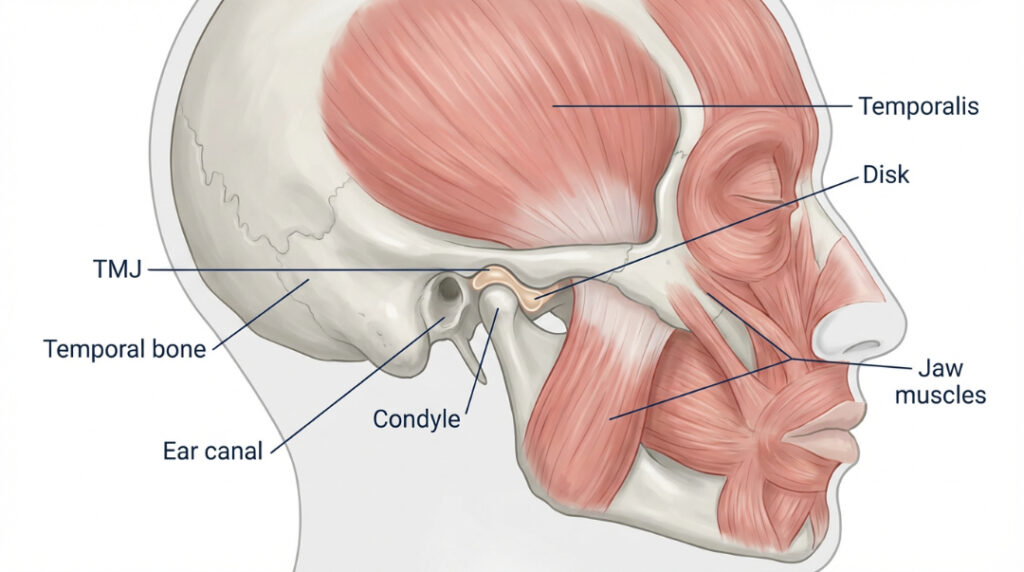
The temporomandibular joint (TMJ) is the hinge joint that connects your jawbone to your skull. It allows you to speak, chew, and move your jaw. When this joint or the surrounding muscles are stressed or injured, it leads to temporomandibular joint disorder (TMD).
Symptoms often include:
- Pain in the jaw or around the ear
- Clicking or popping sounds when opening the mouth
- Difficulty chewing
- Locking of the jaw
- Headaches or neck pain
Understanding how this joint works helps explain why weight lifting can trigger or worsen TMJ symptoms.
Weightlifting TMJ Risk: How Heavy Training Affects the Jaw
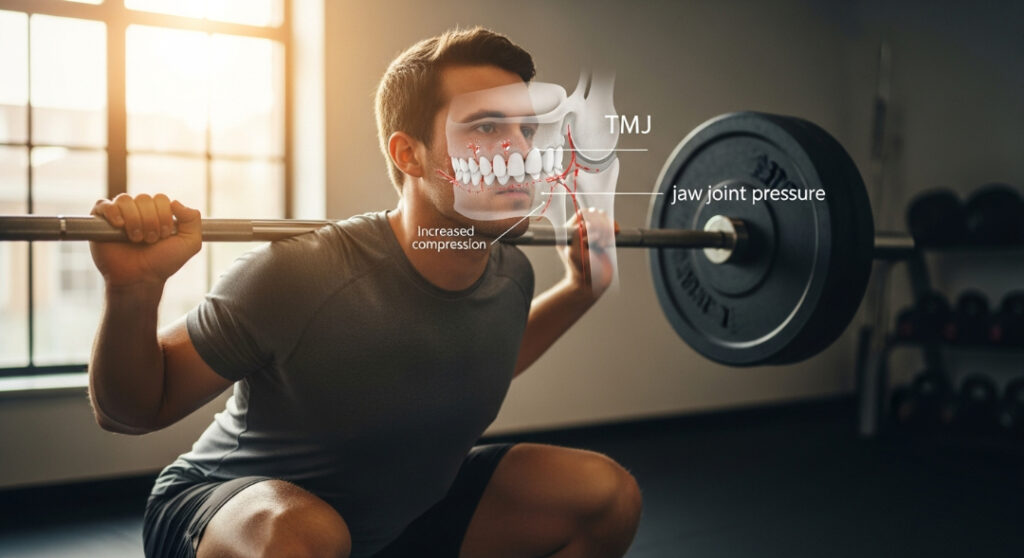
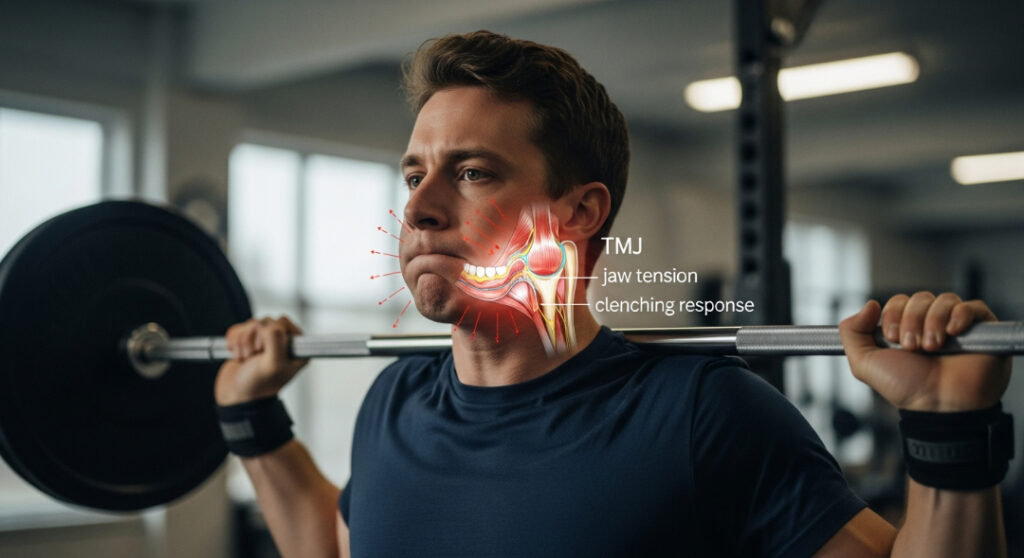
Weight lifting stresses more than the muscles you target. When you brace for a lift, you unconsciously clench your teeth and tighten your jaw muscles. That pressure transfers to the TMJ.
Key factors:
- Jaw clenching during exertion increases compressive forces on the joint.
- Intra-abdominal pressure from bracing the core stiffens the neck and jaw muscles.
- Neck posture during overhead lifts or deadlifts changes head alignment and strains the TMJ.
- Repetitive training without recovery increases muscle tension and joint inflammation.
Buford Dentist notes that athletes often underestimate how much bracing and jaw tension contribute to dental and joint pain during workouts.
Do Lifting Weights Cause TMJ Pain in Certain Exercises
Neck Posture And TMJ: The Connection During Workouts
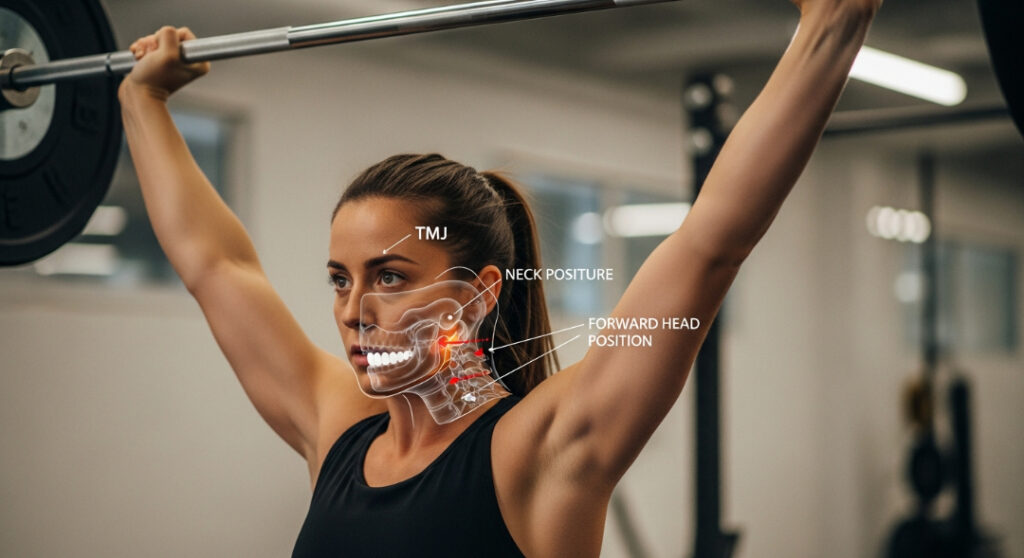
The cervical spine and jaw are closely connected. Poor lifting posture pushes the head forward or tilts it back, straining the TMJ.
Issues from posture:
- Forward head posture shifts pressure to the jaw joint.
- Tight trapezius and neck muscles radiate tension into the face.
- Shoulder imbalance changes how the jaw muscles activate.
Correcting posture is key to preventing TMJ pain in lifters.
Bruxism And Exercise: Jaw Clenching Under Load
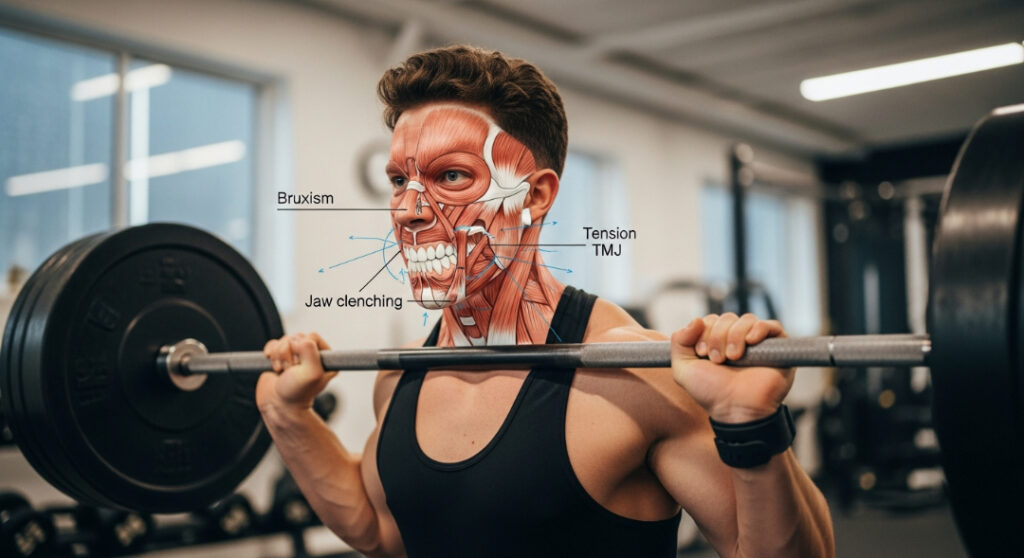
Bruxism, or teeth grinding, often shows up during stressful lifts. Even without realizing it, lifters bite down to stabilize.
This behavior:
- Increases joint inflammation
- Wears down teeth over time
- Creates facial muscle fatigue
Sports dentistry often recommends mouthguards to reduce the impact of bruxism during lifting.
TMJ Symptoms In Lifters: What To Watch For
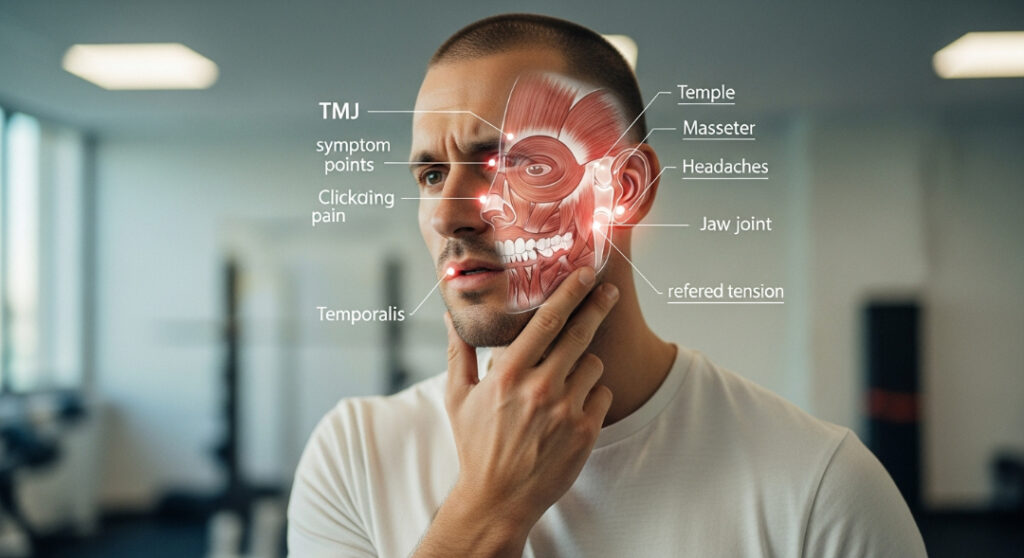
Early signs help prevent long-term damage.
Symptoms linked to weight lifting:
- Sharp jaw pain after a workout
- Clicking or popping when opening the mouth
- Tightness in the jaw and temples
- Ear pain or pressure after heavy lifts — in some cases, TMJ issues can even affect balance. Understanding how TMJ can lead to dizziness is important, especially if you notice vertigo or unsteadiness during workouts.
- Morning headaches after training days
Ignoring these signals risks chronic TMD.
How Common Is TMJ Among Lifters
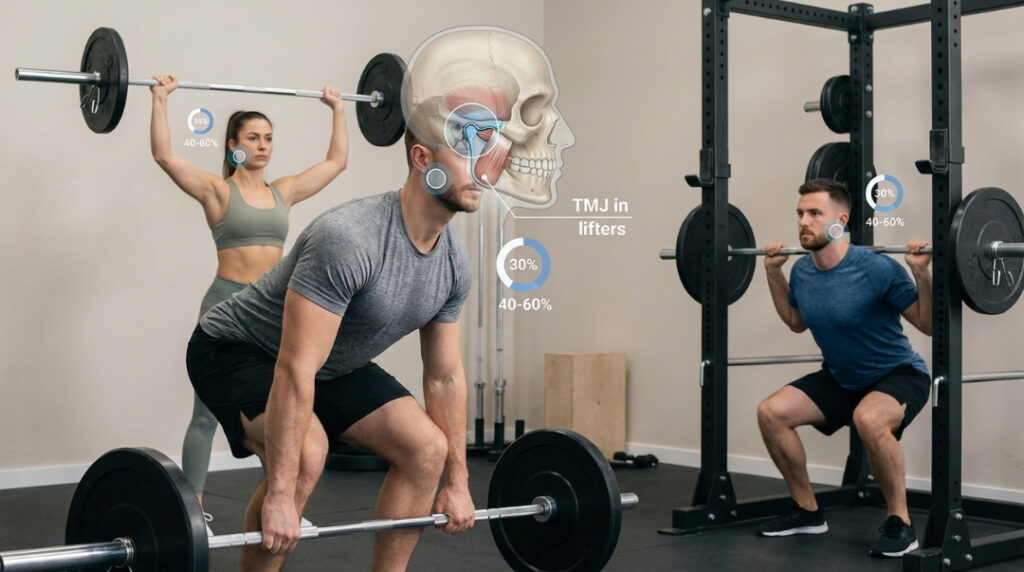
Research shows athletes and strength trainers have higher rates of TMD symptoms than the general population.
- A clinical review found that over 30% of athletes reported jaw-related discomfort.
- Studies link TMJ pain to high-intensity training that involves bracing and clenching.
- Lifters with preexisting jaw issues are more vulnerable.
The problem is underreported, as many athletes blame neck or dental issues instead of the TMJ.
Diagnosis And When To Seek Help

If you suspect TMJ pain from lifting, get evaluated early.
At-home checks:
- Listen for clicking or popping when opening wide
- Track pain linked to specific workouts
- Note headaches or ear pain after lifting days
Professionals who diagnose TMJ:
- Dentist or TMJ specialist
- Oral and maxillofacial expert
- Physical therapist with TMJ experience
- Sports medicine physician
Buford Dentist emphasizes early evaluation prevents chronic damage and reduces downtime from training.
Preventing TMJ During Strength Training
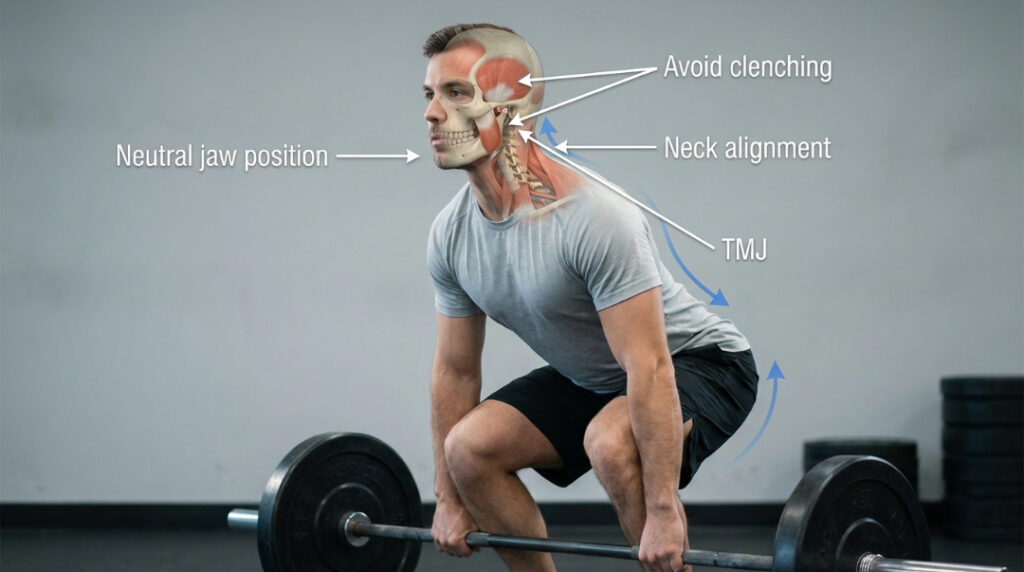
Practical steps help protect your jaw while lifting.
- Focus on breathing: exhale through the lift instead of clenching.
- Relax your jaw: keep teeth slightly apart during exertion.
- Use a mouthguard: reduces bruxism impact.
- Correct posture: maintain neutral spine and neck alignment.
- Warm up the neck and shoulders: improves mobility and reduces tension.
- Monitor training volume: avoid overtraining that tightens muscles.
Making small changes lowers long-term TMJ risk.
Treatment And Recovery Options For TMJ Pain

Once TMJ symptoms develop, treatment depends on severity.
Conservative care:
- Jaw stretches and relaxation techniques
- Physical therapy for neck and jaw muscles
- Massage therapy targeting facial muscles
- Custom dental splints or guards
Medical options:
- Anti-inflammatory medication
- Injections in severe cases
- Surgical consultation for rare chronic cases
Most patients recover with conservative methods if treated early.
Lifting Styles And TMJ Risk Differences
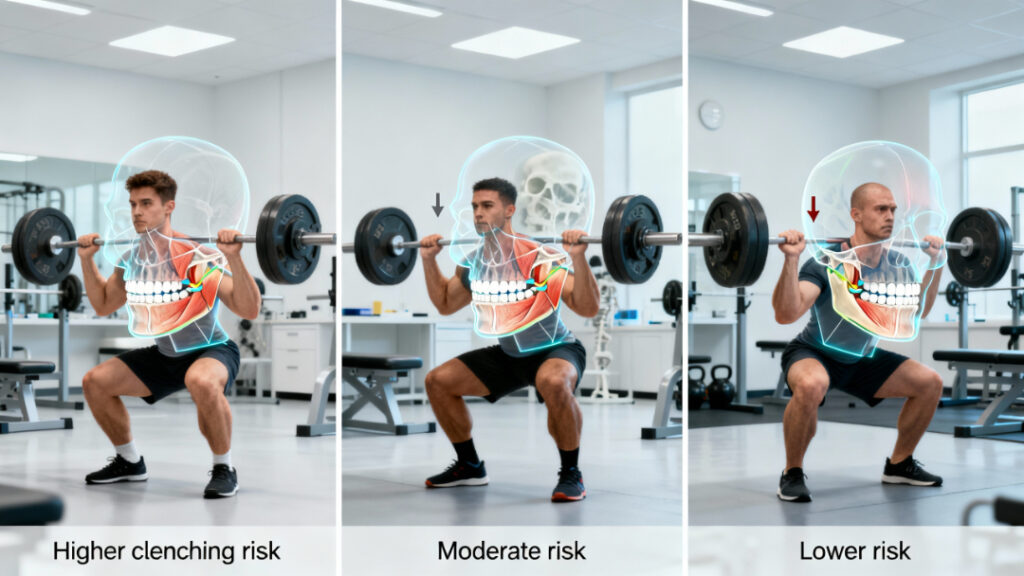
Different training styles affect TMJ stress.
- Powerlifting: highest risk due to maximum loads and bracing.
- Bodybuilding: moderate risk, depends on posture and repetition volume.
- Olympic lifting: high risk from overhead movements and explosive force.
Modifications:
- Use lighter loads with strict form.
- Reduce overhead volume if symptoms flare.
- Alternate compound lifts with isolation movements.
Long-Term Outlook If You Ignore TMJ

Untreated TMJ problems worsen over time.
Possible outcomes:
- Chronic pain in the jaw and neck
- Worn teeth from grinding
- Difficulty eating and speaking
- Sleep disturbance and headaches
- Reduced quality of life from persistent discomfort
Early intervention improves recovery and keeps lifters training without interruption. Many athletes also wonder How Long Does TMJ Last, and Does It Go Away on Its Own? — understanding recovery timelines helps set realistic expectations and reinforces the importance of treatment.
FAQs About Weight Lifting And TMJ
Is TMJ permanent?
No, with treatment most patients improve. Chronic untreated cases are harder to manage.
Can I still lift weights if I have TMJ?
Yes, but adjust technique, reduce load, and seek professional guidance.
Are there specific mouthguards for lifters?
Yes, dentists provide custom guards designed for athletes.
How long does TMJ pain last?
Mild cases resolve in weeks. Severe cases take months with treatment.
Does breathing technique reduce TMJ stress?
Yes, controlled exhalation prevents clenching and lowers pressure on the joint.
Best Weight Lifting Form To Avoid TMJ
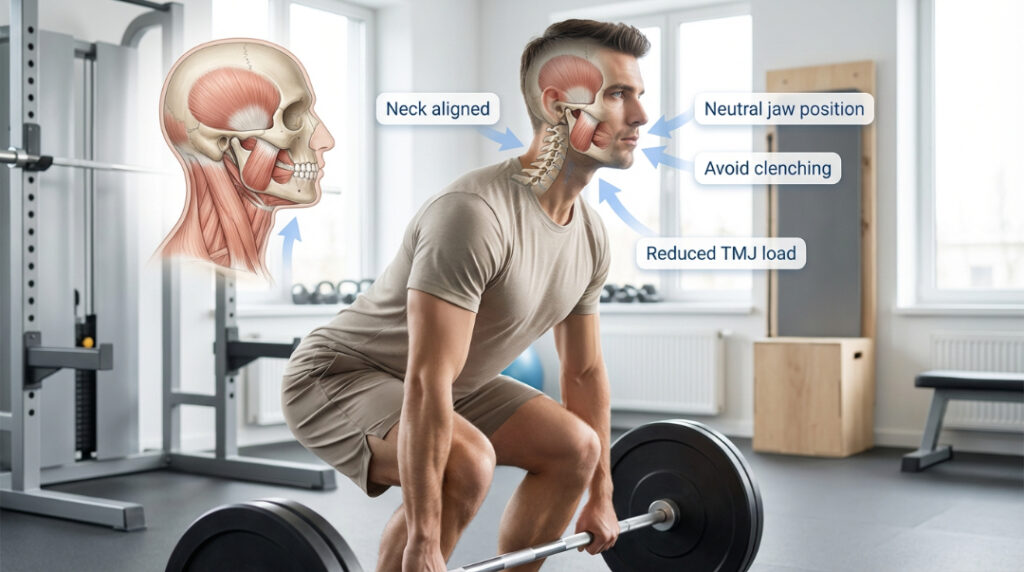
Form adjustments protect the jaw while keeping strength gains.
- Keep your head aligned with your spine
- Avoid pressing your jaw into benches or pads
- Reduce weight if you feel jaw tension
- Pause between reps to relax the face
- Focus on proper breathing instead of clenching