TLDR;
Coffee stains teeth because it contains tannins that bind to enamel. You can remove these stains with at-home remedies like baking soda or activated charcoal, or through professional treatments such as in-office whitening. Prevent stains by rinsing after drinking coffee and maintaining good oral hygiene.
Why Does Coffee Stain Teeth?

Coffee contains tannins—natural compounds that cling to the enamel of your teeth. These tannins combine with chromogens, pigmented molecules that cause staining, and stick to the porous surface of your enamel.
- Tannins and chromogens: Together they create stubborn surface stains.
- Enamel porosity: Tooth enamel has microscopic pores that absorb dark pigments.
- Extrinsic vs intrinsic stains:
- Extrinsic stains are on the outer layer and respond well to cleaning.
- Intrinsic stains are deeper, often requiring professional treatment.
Even a daily coffee habit can lead to a yellowish tint over time if not addressed properly.
Natural Ways to Remove Coffee Stains
Baking Soda and Hydrogen Peroxide
One of the most effective home remedies is a paste of baking soda and hydrogen peroxide.
- Mix a small amount of hydrogen peroxide with baking soda until it forms a paste.
- Apply gently with a toothbrush for 1–2 minutes.
- Rinse thoroughly.
Pros: Effective on surface stains
Cons: Overuse can damage enamel
Oil Pulling with Coconut Oil
Swishing coconut oil in your mouth for 10–15 minutes daily is an ancient Ayurvedic practice.
- Helps remove toxins and reduce plaque buildup
- Mild whitening effect over time
Pros: Natural and gentle
Cons: Requires consistency, results vary
Activated Charcoal
- Brush gently using a toothbrush dipped in activated charcoal powder.
- Rinse thoroughly and avoid swallowing.
Pros: Abrasive but effective for surface stain removal
Cons: Can be too abrasive for some enamel types
Strawberry and Baking Soda Paste
- Mash one ripe strawberry and mix with ½ teaspoon baking soda.
- Apply to teeth and leave for 5 minutes.
- Rinse and brush normally.
Pros: Contains malic acid which helps remove stains
Cons: Natural acids may weaken enamel over time if used excessively
Banana Peel Method
- Rub the inside of a banana peel on your teeth for 2 minutes.
- Wait 10 more minutes before brushing.
Pros: Contains minerals like potassium and magnesium
Cons: Minimal scientific backing
Best Over-the-Counter Teeth Whitening for Coffee Stains

Whitening Toothpaste
Choose toothpaste labeled as enamel-safe and containing:
- Baking soda
- Hydrogen peroxide
- Fluoride
Look for ADA-approved options like:
- Colgate Optic White
- Crest 3D White
Whitening Mouthwash
Products with carbamide or hydrogen peroxide provide a mild bleaching effect:
- Use after brushing
- Swish for 60 seconds
Whitening Strips
Crest Whitestrips are the most well-known option, but other brands also offer:
- Lower peroxide concentrations for sensitive teeth
- Shorter application times
Note: Always follow instructions carefully to prevent sensitivity
Charcoal-Based Products
Use caution with charcoal products:
- May wear down enamel with frequent use
- Opt for those verified by dental professionals
Professional Teeth Whitening for Coffee Stains
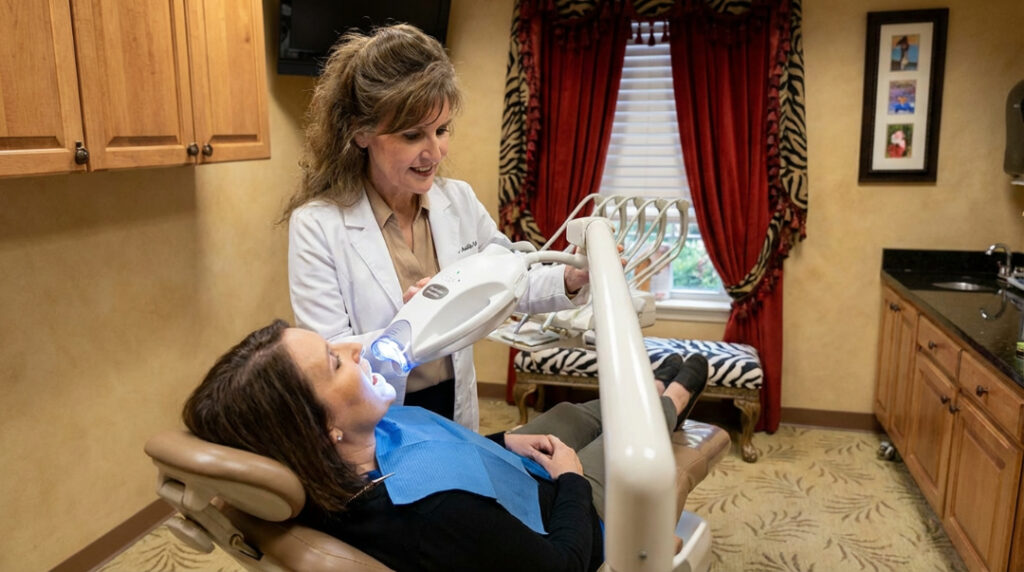
When stains become too stubborn for home remedies, it’s time to visit Buford Dentist.
In-Office Bleaching
Treatments like Zoom Whitening or laser whitening offer immediate results:
- Takes about 45–60 minutes
- Results visible after one session
- Stronger bleaching agents than OTC products
Custom Take-Home Trays
- Tailored trays filled with professional-grade gel
- Worn for 30 minutes to an hour over a few weeks
- More gradual but customizable
Microabrasion
- Removes a thin layer of enamel
- Useful for extrinsic surface stains
Veneers or Bonding
For severe or intrinsic staining:
- Veneers cover the front of the teeth
- Bonding fills in discolored areas with tooth-colored resin
Cost & Comparison:
|
Treatment
|
Avg. Cost
|
Duration
|
Result Longevity
|
|
In-office whitening
|
$500–$1000
|
1 session
|
1–3 years
|
|
Custom trays
|
$250–$500
|
2–3 weeks
|
1–2 years
|
|
Veneers/Bonding
|
$1000+ per tooth
|
Permanent
|
10–15 years
|
How to Prevent Coffee Stains on Teeth

Once you've removed the stains, prevention is key.
Use a Straw
- Reduces contact between coffee and teeth
- Works well with iced coffee
Rinse Immediately
- Swish with water or mouthwash after every cup
- Prevents tannins from setting in
Don’t Brush Immediately After
- Wait at least 30 minutes after drinking coffee
- Acid softens enamel; brushing too soon can cause erosion
Add Dairy or Plant Milk
- Dairy binds with tannins, reducing staining
- Plant-based milks with calcium may offer similar effects
Regular Dental Cleanings
Coffee Habits That Won’t Stain Teeth

Adjust your coffee habits to protect your smile.
- Cold Brew: Lower acidity makes it less likely to stain
- Light Roasts: Contain fewer staining agents than dark roasts
- Drink Water Between Sips: Flushes away tannins
- Drink Quickly, Not Constantly: Less contact time with enamel
Remineralizing Toothpaste: Strengthens enamel, making it stain-resistant
FAQs About Coffee Stains on Teeth
Can teeth go back to white after coffee stains?
Yes, with the right care and treatments—both at home and professionally—coffee stains can be reversed.
What’s the fastest way to remove coffee stains?
Professional in-office whitening offers the quickest and most noticeable results, often in under an hour.
Are coffee stains on teeth permanent?
No. Most coffee stains are extrinsic and can be removed. However, untreated stains may become deeper and require professional intervention.
How do dentists remove coffee stains?
Dentists use:
High-concentration bleaching agents
Microabrasion techniques
Custom whitening trays
Polishing and ultrasonic cleanings